Rectivas Materials · Flame retardant manufacturer and formulation partner sales@rectivas.com  ·  WhatsApp +86 180 3191 1520

Flame Retardant Manufacturer — B2B Supply Since Day One of Your Project

Flame Retardant Additives and Masterbatch Manufacturer

Custom halogen-free and halogenated flame retardant solutions for plastics, polymers, LSZH cable compounds and engineering materials — supplied as additives, masterbatch and formulation support for PP, PE, PVC, PC, PC/ABS, PA, ABS and PU.

Flame RatingUL94 V-0 / V-1 / V-2
Oxygen IndexLOI 24 – 38
CableLSZH · IEC 60332
ComplianceRoHS · REACH
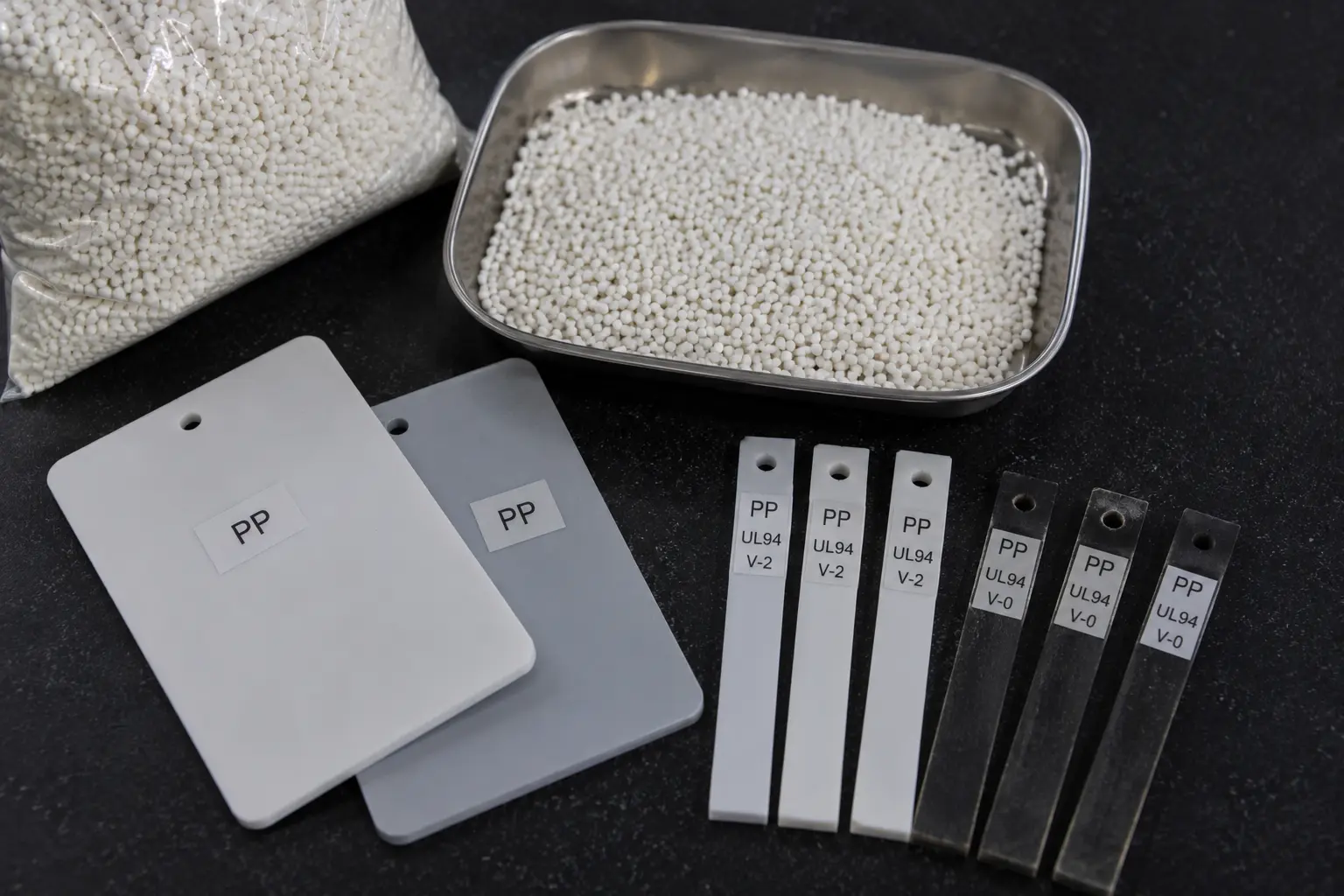
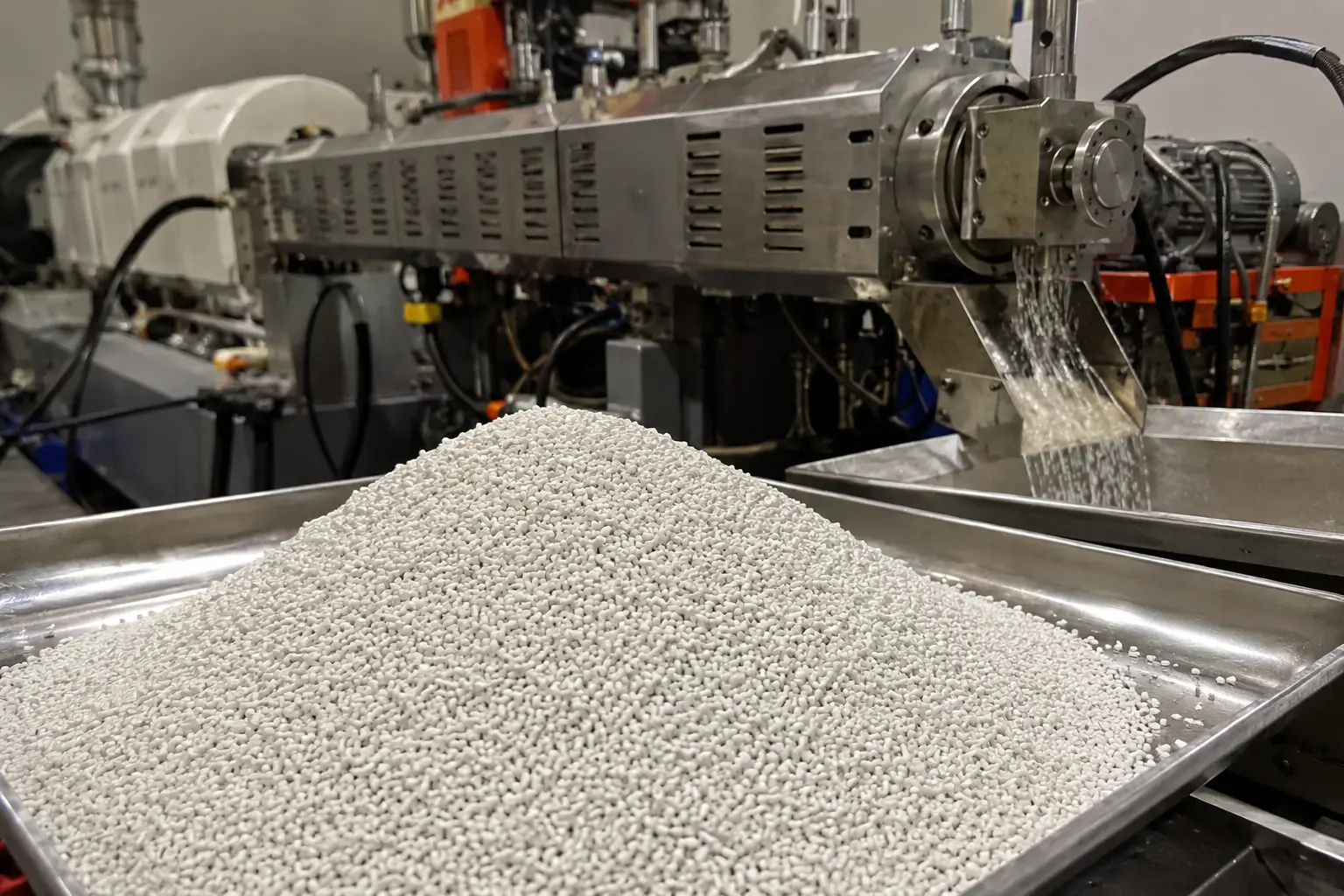
Flame retardant masterbatch pellets in front of an extrusion and compounding line Fig. 01 — Masterbatch + factory proof image

Use a real macro shot of FR masterbatch pellets with an extrusion or compounding line in the background. This image should prove product form, manufacturing context and B2B supply credibility in the first viewport.

FR-MB series
Carrier — PP / PE / EVA
Loading — 60–70 %
Form — pellet, 3 mm
01 / 09Products

Two Core Product Lines for Flame Retardant Polymer Applications

This section separates the two main buying paths: buyers who need flame retardant additives for compounding, and buyers who need flame retardant masterbatch for easier direct dosing.

Buyer clarity: additive or masterbatch Product scope: powder, liquid and pellet options Selection value: form, dosing and handling comparison
Line A — Additives

Flame Retardant Additives

Powders, liquids and compounded polymer additives blended into plastics to reduce flammability. Halogen-free and halogenated grades for plastic modification, extrusion, injection molding and cable compound applications.

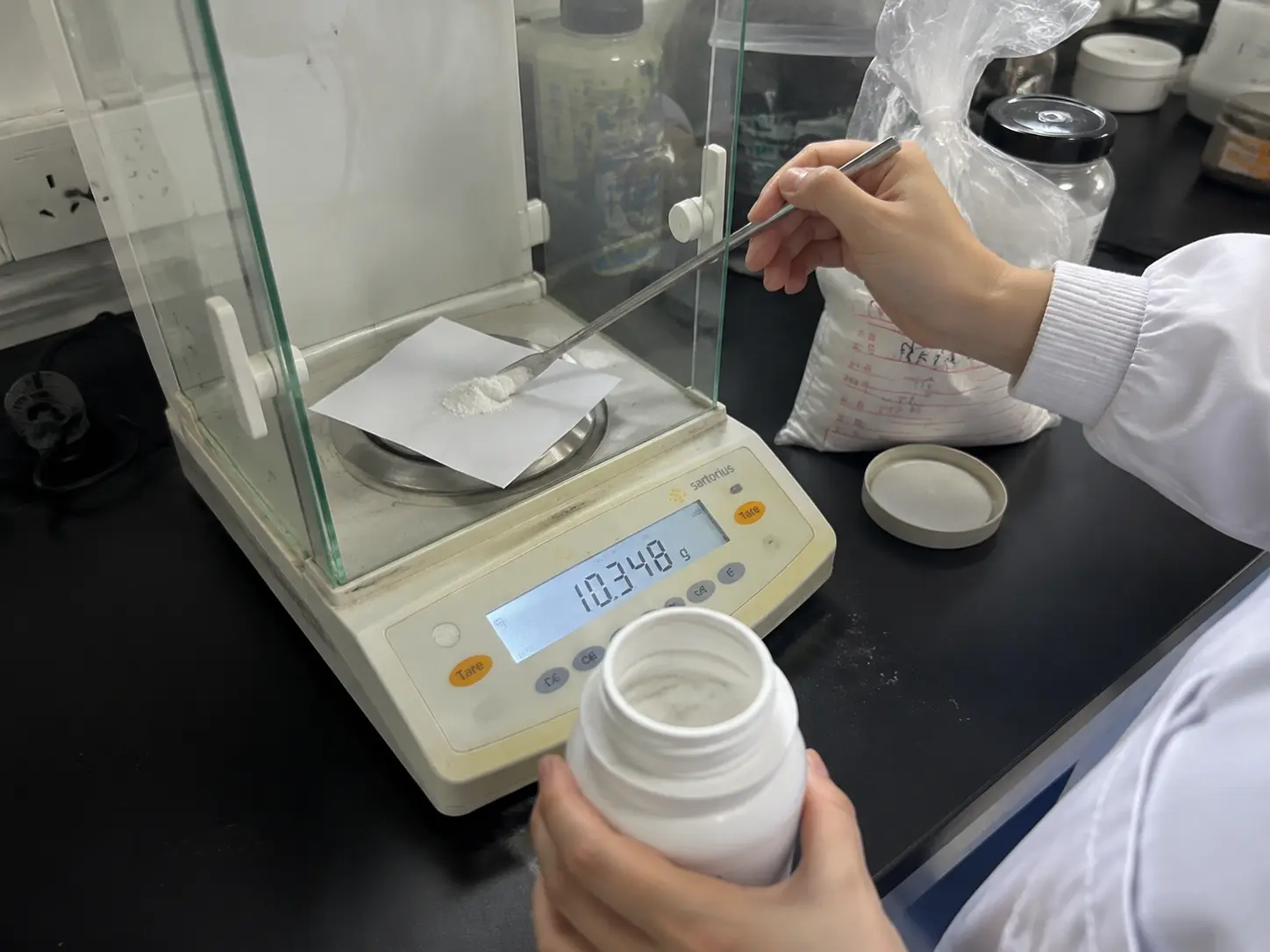
White powder flame retardant additive, sieve analysis benchFig. 02 — white powder FR additive, sieve analysis benchProof point: additive form, particle control and QC handling before formulation.
  • FormsPowder · liquid · compounded blends
  • ChemistriesPhosphorus, nitrogen, mineral, brominated + synergists
  • Best forIn-house compounding, maximum formulation control
Explore flame retardant additives →
Line B — Masterbatch

Flame Retardant Masterbatch

Pre-dispersed concentrates of flame retardant additives in a carrier resin. As a flame retardant masterbatch manufacturer, we customize carrier resin, loading ratio and dispersion performance for PP, PE, PVC and engineering plastics.

FR masterbatch pellets exiting an underwater pelletizerFig. 03 — FR masterbatch pellets exiting underwater pelletizerProof point: pelletized masterbatch production, pre-dispersion and scalable compounding capability.
  • CarriersPP · PE · EVA · PA · custom on request
  • Loading40 – 70 % active content, application-dependent
  • Best forDirect dosing on extrusion and injection molding lines
Explore flame retardant masterbatch →

Selection Guide — Additives vs Masterbatch

CriterionFlame Retardant AdditivesFlame Retardant Masterbatch
FormPowder, liquid or compounded blendPellet concentrate in carrier resin
DosingWeighed and mixed during compoundingDirect let-down at the hopper, gravimetric or volumetric
DispersionDepends on your compounding equipmentPre-dispersed — consistent on standard lines
HandlingDust control and dedicated feeding requiredClean, low-dust, easy storage
Formulation controlMaximum — adjust every componentFixed recipe per grade; custom grades available
Typical buyerCompounders, cable compound producersMolders, extruders, converters without compounding
02 / 09Proof

See the Flame Retardant Effect, Not Just the Claim

Every UL94 rating on this site is backed by real testing in our own lab, filmed as it happens — not a stock photo or a marketing claim. Watch a treated sample self-extinguish next to an untreated one, then see the batch documentation behind it.

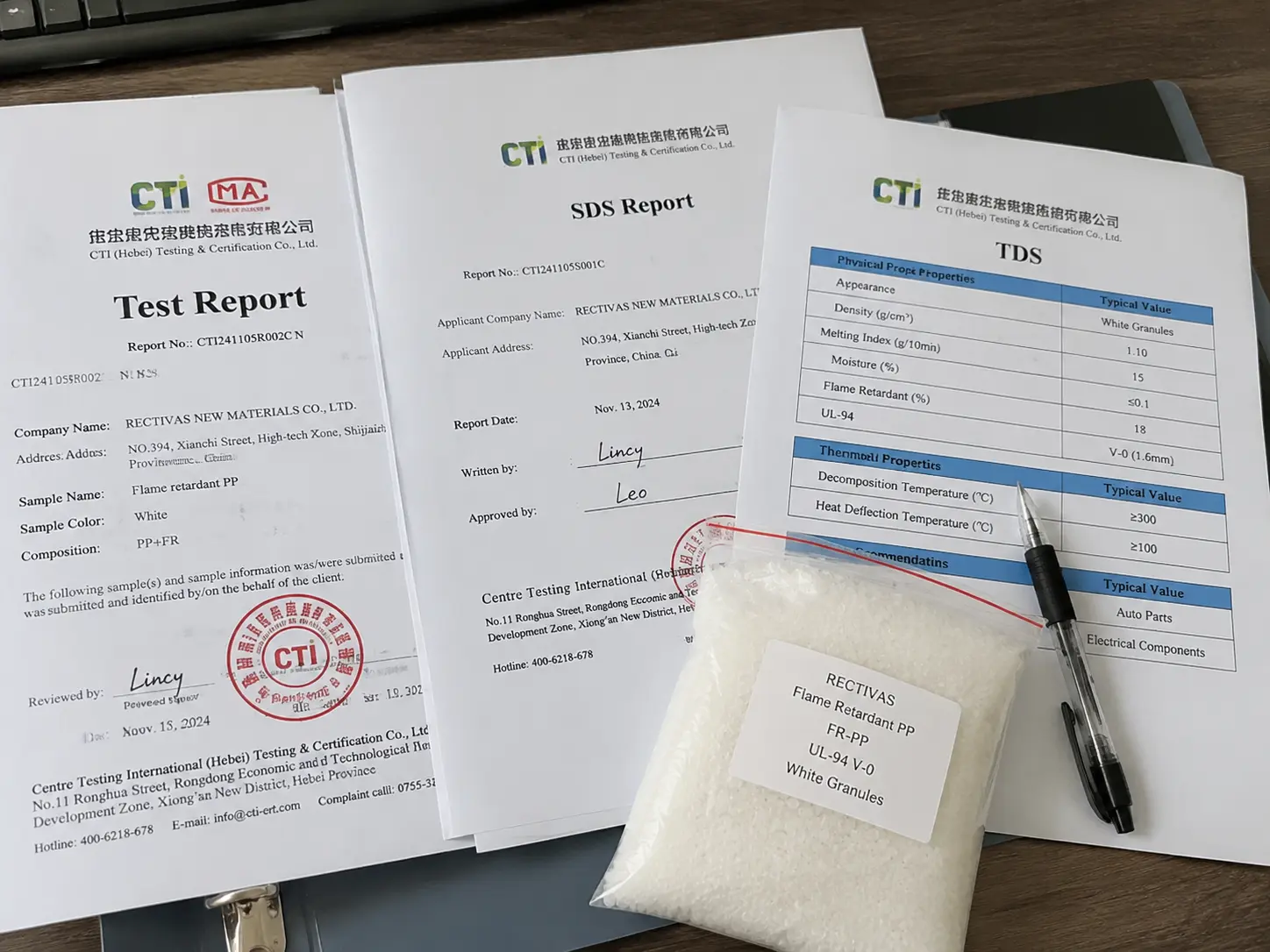
Live proof: real burn test, filmed in our lab Documentation: TDS · SDS · Test Report per batch Traceability: every batch tested before shipment
Video — untreated sample keeps burning, flame retardant sample self-extinguishesProof point: side-by-side UL94 burn comparison, filmed in our own QC lab.
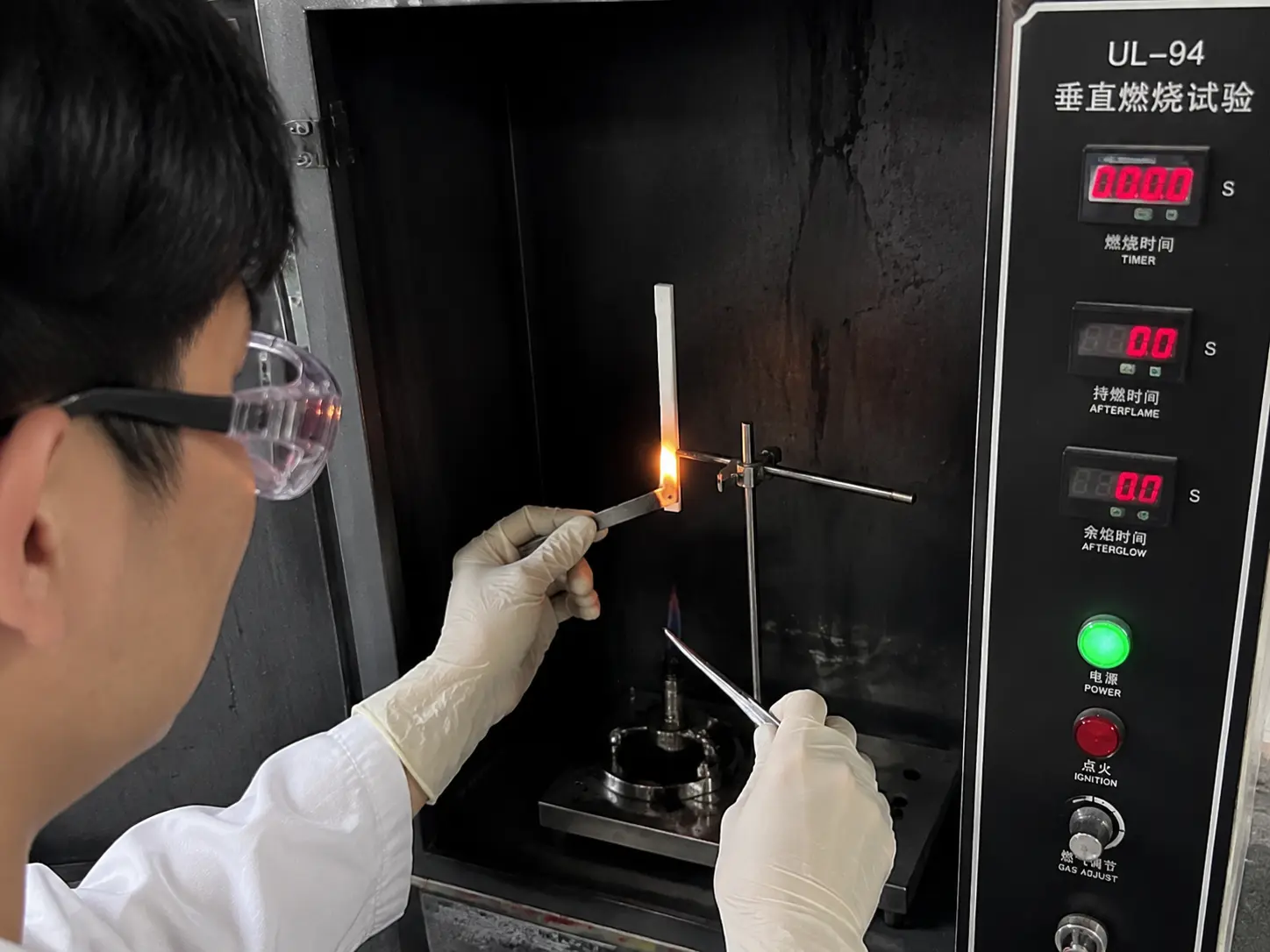
Technician igniting a UL94 vertical burn test sampleFig. — UL94 vertical burn chamber, live ignitionProof point: same test standard cited across every product page.
Test report, SDS and TDS documents with a labeled sample bagFig. — Test Report, SDS and TDS for a shipped batchProof point: documentation is issued per batch, not a generic template.
03 / 09Systems

Halogen-Free and Halogenated Flame Retardant Systems

Different polymer systems require different flame retardant choices. We help buyers compare halogen-free, halogenated, brominated and low-smoke systems based on flame rating, smoke performance, processing stability, cost and compliance requirements.

System scope: halogen-free, halogenated, brominated and LSZH Compliance value: RoHS, REACH, smoke and flame rating context Decision value: performance, cost and regulation tradeoffs
S-01

Halogen-Free Flame Retardants

For low-smoke, RoHS/REACH-oriented and cable compound applications where halogen content must be avoided.

RoHSREACHLow Smoke
S-02

Halogen-Free FR Masterbatch

For easier dosing, better dispersion and cleaner processing in plastic compounding.

Pellet FormDirect Dosing
S-03

Halogenated Flame Retardants

Including brominated systems, where high flame retardant efficiency and cost control are important, subject to regulatory confirmation.

BrominatedHigh Efficiency
S-04

Low Smoke / LSZH Compounds

Flame retardant LSZH compound support for wire, cable, insulation and sheathing materials requiring low smoke and halogen-free performance.

IEC 60332Zero Halogen
04 / 09Applications

Polymer Application Matrix

Select flame retardant additives or masterbatch according to the base resin, processing method, target flame rating and end-use requirements.

Resin fit: PP, PE, PVC, PC, PC/ABS, PA, ABS and cable Application value: match polymer to system type Target value: compare UL94, LOI and low-smoke needs
PolymerHalogen-FreeHalogenatedMasterbatchLSZH / Low SmokeTypical Targets
PPPolypropyleneUL94 V-2 / V-0 · LOI 26–32
PEPolyethyleneUL94 HB / V-2 · LOI 24–30
PVCFlexible / RigidLOI 30–38 · Low Smoke
PCPolycarbonateUL94 V-0 @ 1.5 mm
PC/ABSBlendUL94 V-0 · Heat Resistance
PANylon 6 / 66UL94 V-0 · GWFI 960 °C
ABSHousingsUL94 V-0 / HB
PUFoam / CoatingsFMVSS 302 · BS 5852
CableLSZH CompoundsIEC 60332 · Low Smoke Zero Halogen
Standard portfolio Available on request — Not typical
05 / 09Formulation

Custom Formulation Support for Your Polymer System

Tell us your resin, processing method, target flame rating and compliance requirements. Our team can recommend suitable flame retardant additives, masterbatch forms and loading ranges for testing.

RFQ path: from resin data to sample recommendation Technical value: formulation, loading range and testing support Buyer value: fewer back-and-forth emails before trial
01

Share your resin and application

Base polymer, end product and any existing formulation constraints.

02

Confirm flame rating and compliance needs

UL94 class, LOI target, smoke requirements, RoHS/REACH and end-market regulations.

03

Select additive or masterbatch form

We recommend the product form, carrier resin and loading range for your line.

04

Test samples and adjust formulation

Sample batches for your trials, with adjustment until performance and cost targets are met.

06 / 09Manufacturing

Manufacturer Capabilities for Consistent Supply

As a flame retardant additives and masterbatch manufacturer, we support formulation adjustment, sample testing, batch production, packaging and export delivery for B2B buyers.

Supply proof: formulation, compounding, QC and packaging Factory value: visible production and test capability Procurement value: batch consistency and export readiness
  • C-01Custom formulation
  • C-02Masterbatch compounding
  • C-03Sample support
  • C-04Batch production
  • C-05Quality control
  • C-06Export packaging
  • C-07Technical documentation
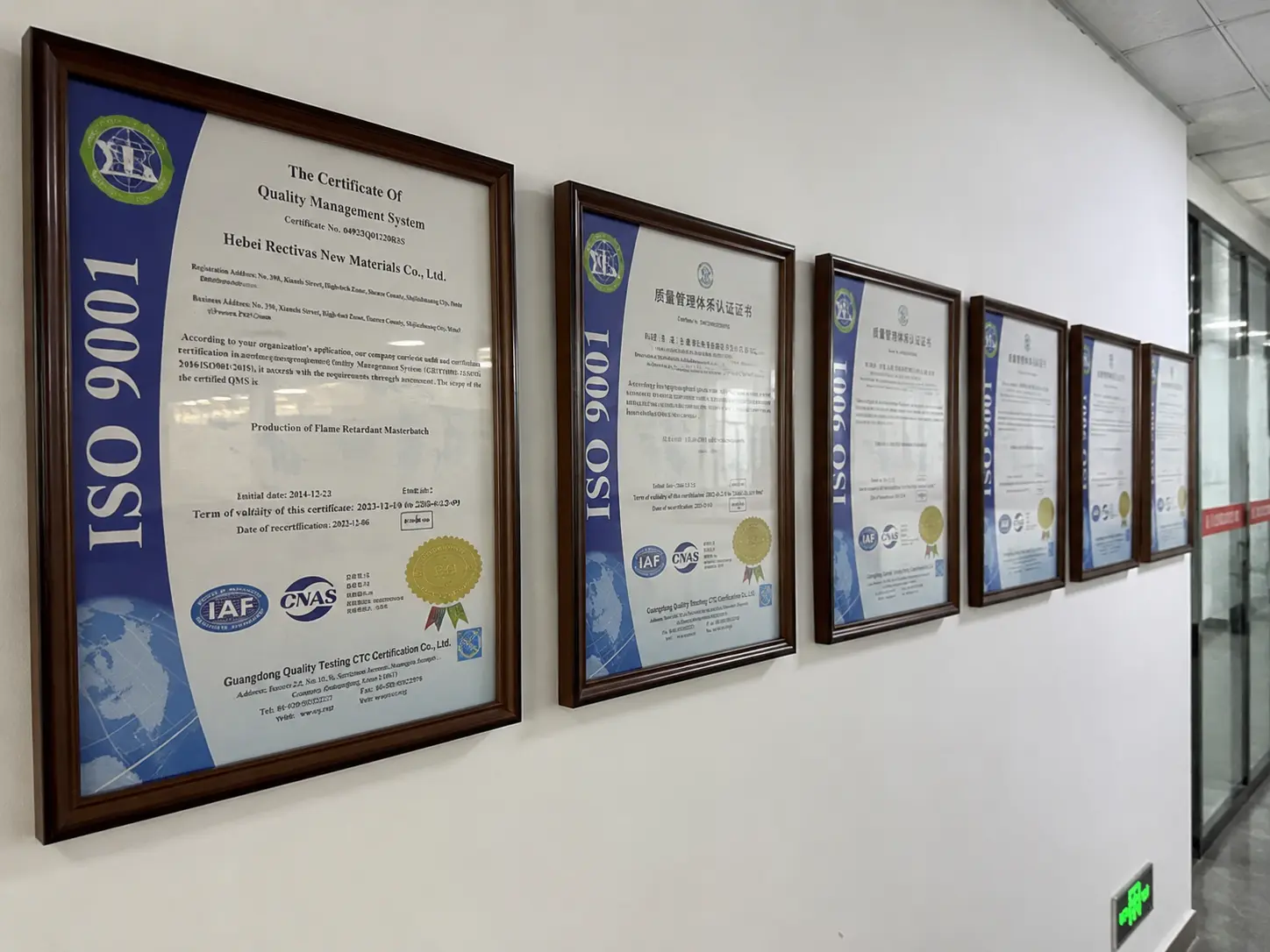
ISO 9001 RoHS Support REACH Support
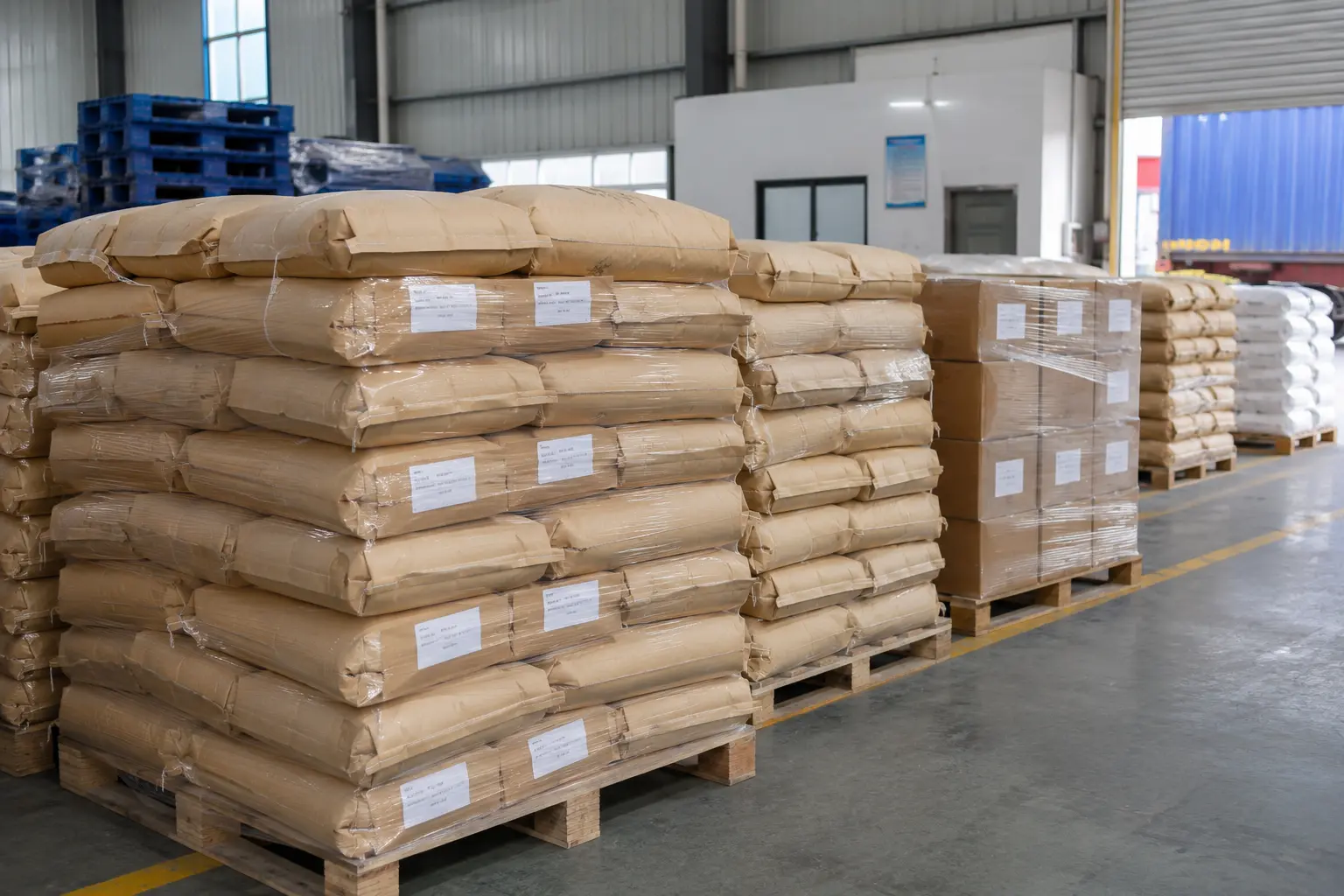
Finished goods in 25 kg kraft bags, palletized for exportFig. 07 — finished goods, 25 kg kraft bags palletized for export packingProof point: export packaging, batch readiness and practical B2B delivery capability.
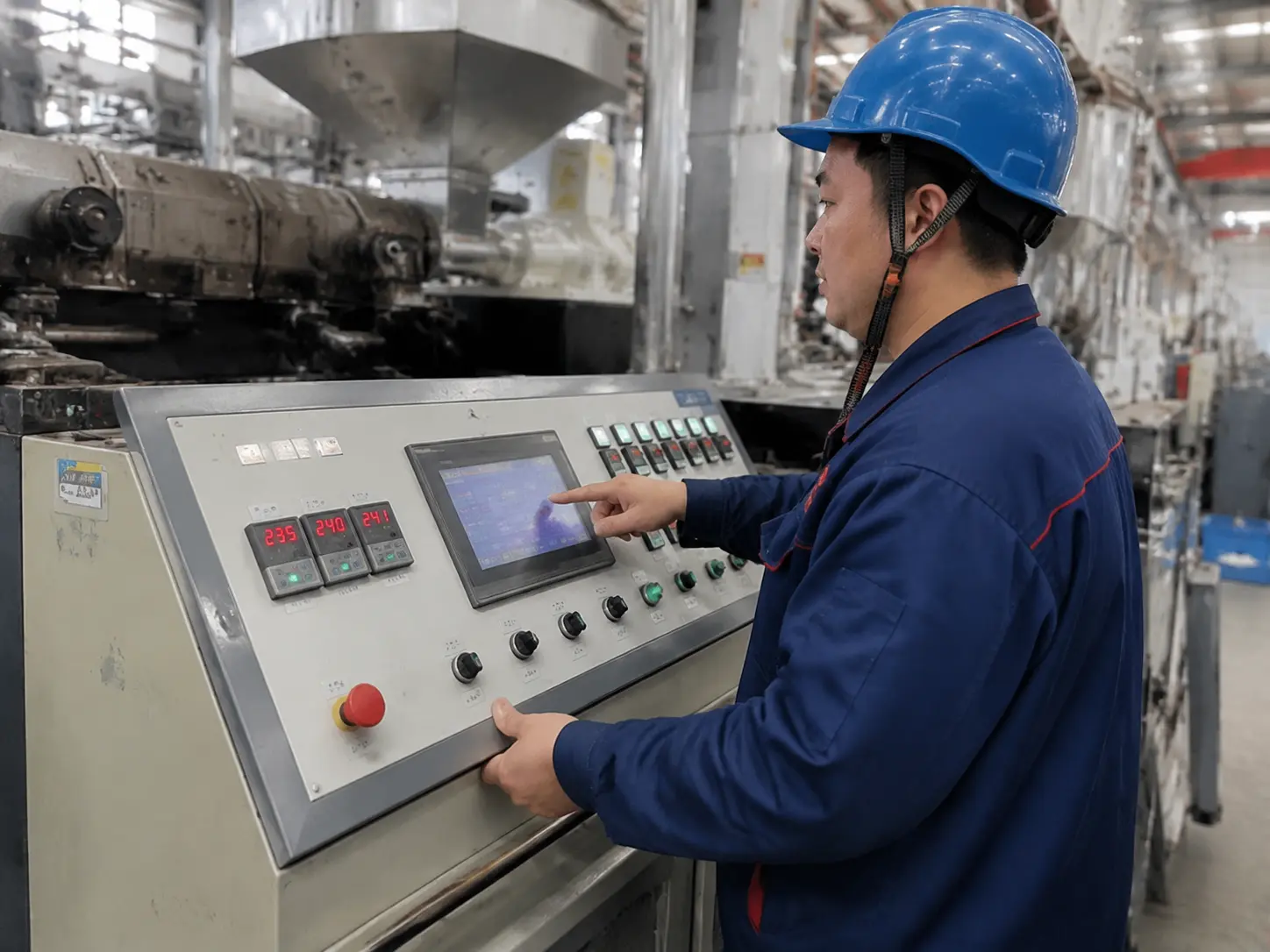
Operator inspecting the extrusion line control panel on the factory floorFig. 04 — real operator adjusting the extrusion line control panelProof point: this is our own line, not a stock photo — real operator, real panel.
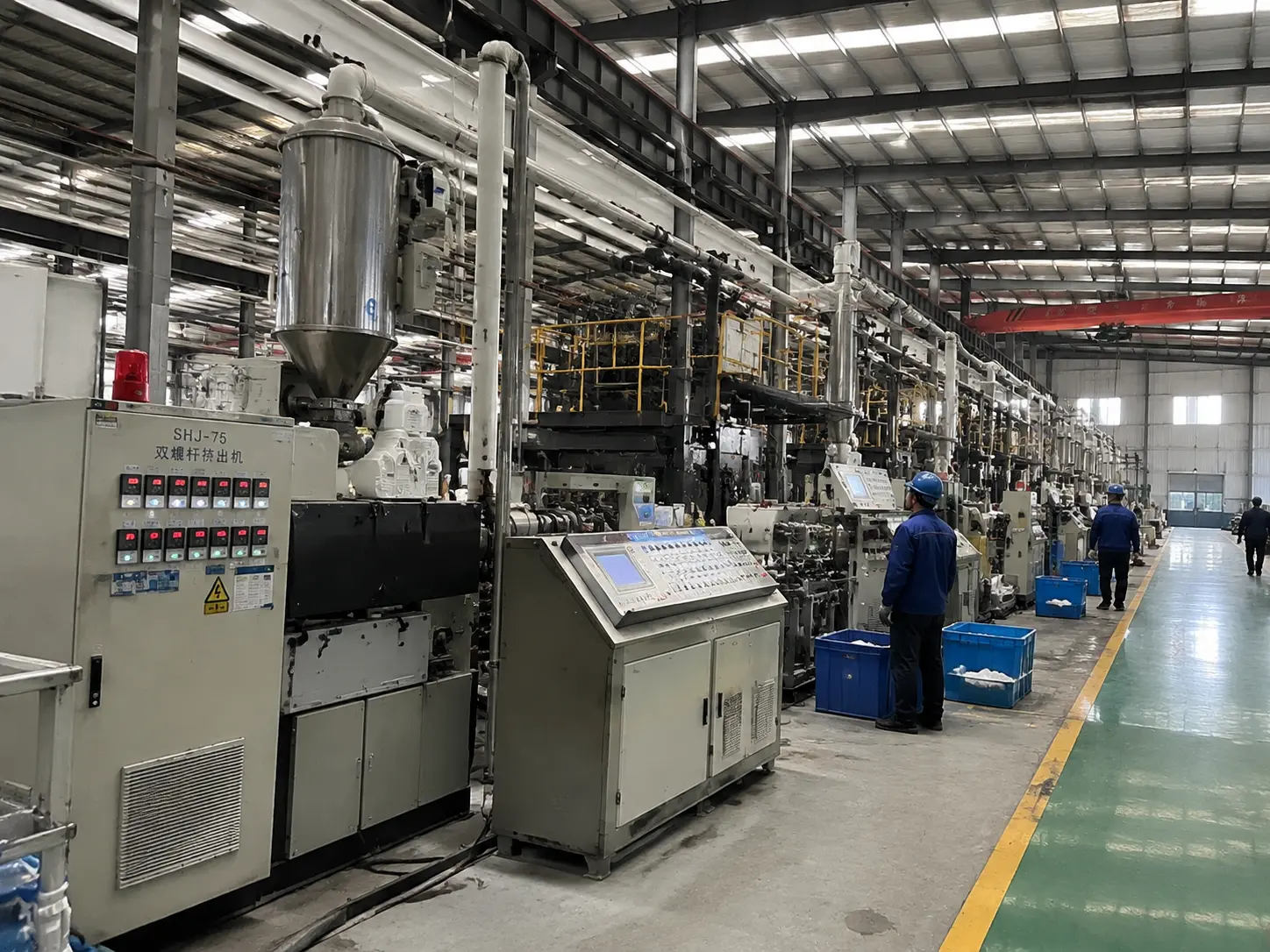
Wide view of the compounding factory floor with workers and machinesFig. 05 — factory floor, SHJ-75 twin-screw compounding lineProof point: real manufacturing location and production scale, not a rendering.
Technician performing a UL94 vertical burn test in the QC labFig. 06 — UL94 vertical burn test in progressProof point: flame rating validated in our own lab, not outsourced claims.
07 / 09Team & Facility

A Real Team, a Real Factory, Real Trade Show Presence

Behind every quotation is a team you can actually meet — in our lab, on our production floor, or at the trade shows where we exhibit every year.

Team: formulation, QC and sales staff on site Certification: ISO 9001 quality management Trade shows: we exhibit and meet buyers in person
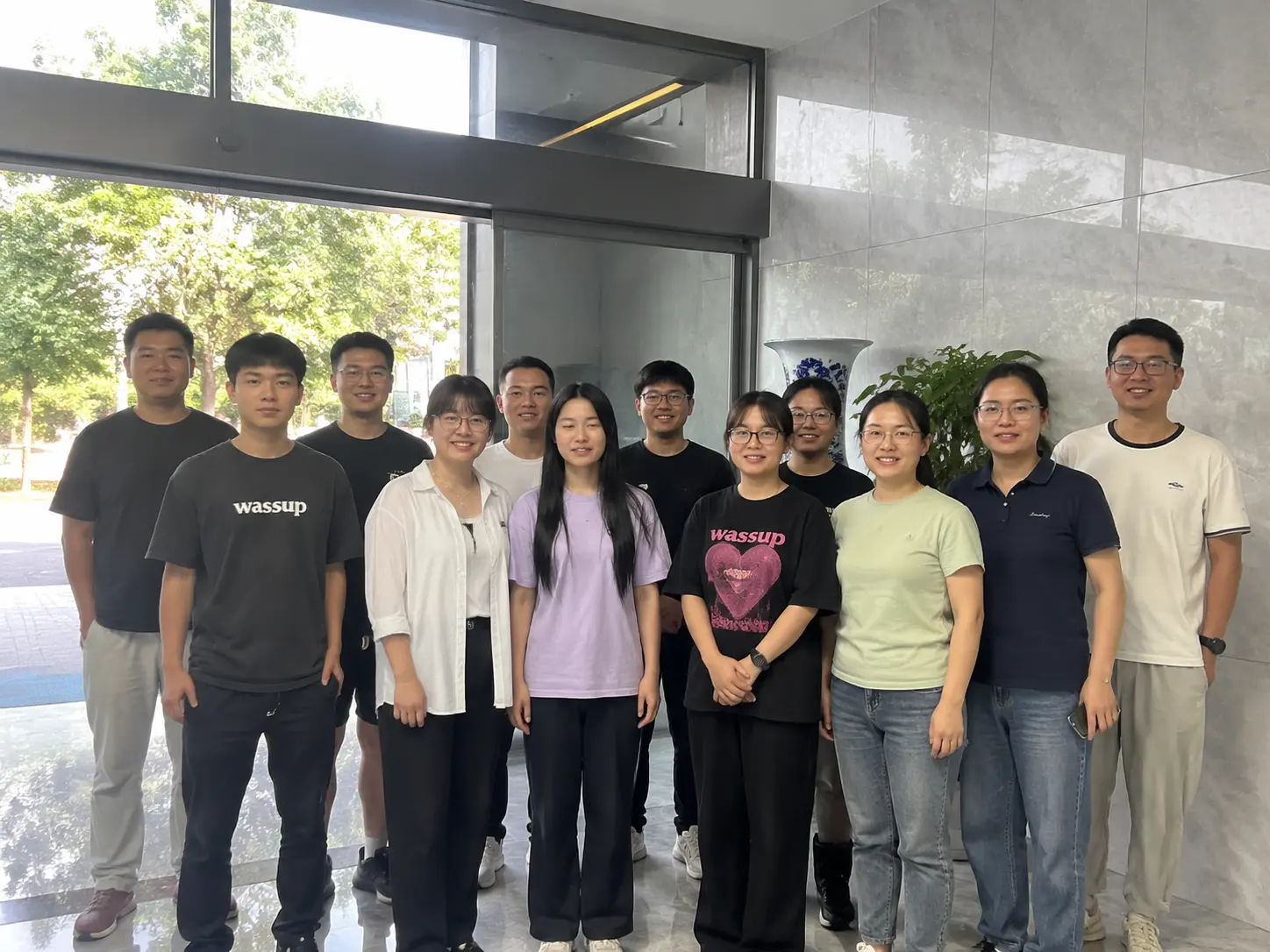
Rectivas Materials team photo at the company entranceOur teamFormulation, QC and sales staff at the Rectivas office.
R&D technicians discussing a flame retardant formulation sheet in the labR&D teamReviewing a formulation sheet before a trial batch.
ISO 9001 certificates on the office wallISO 9001Quality management certification on record.
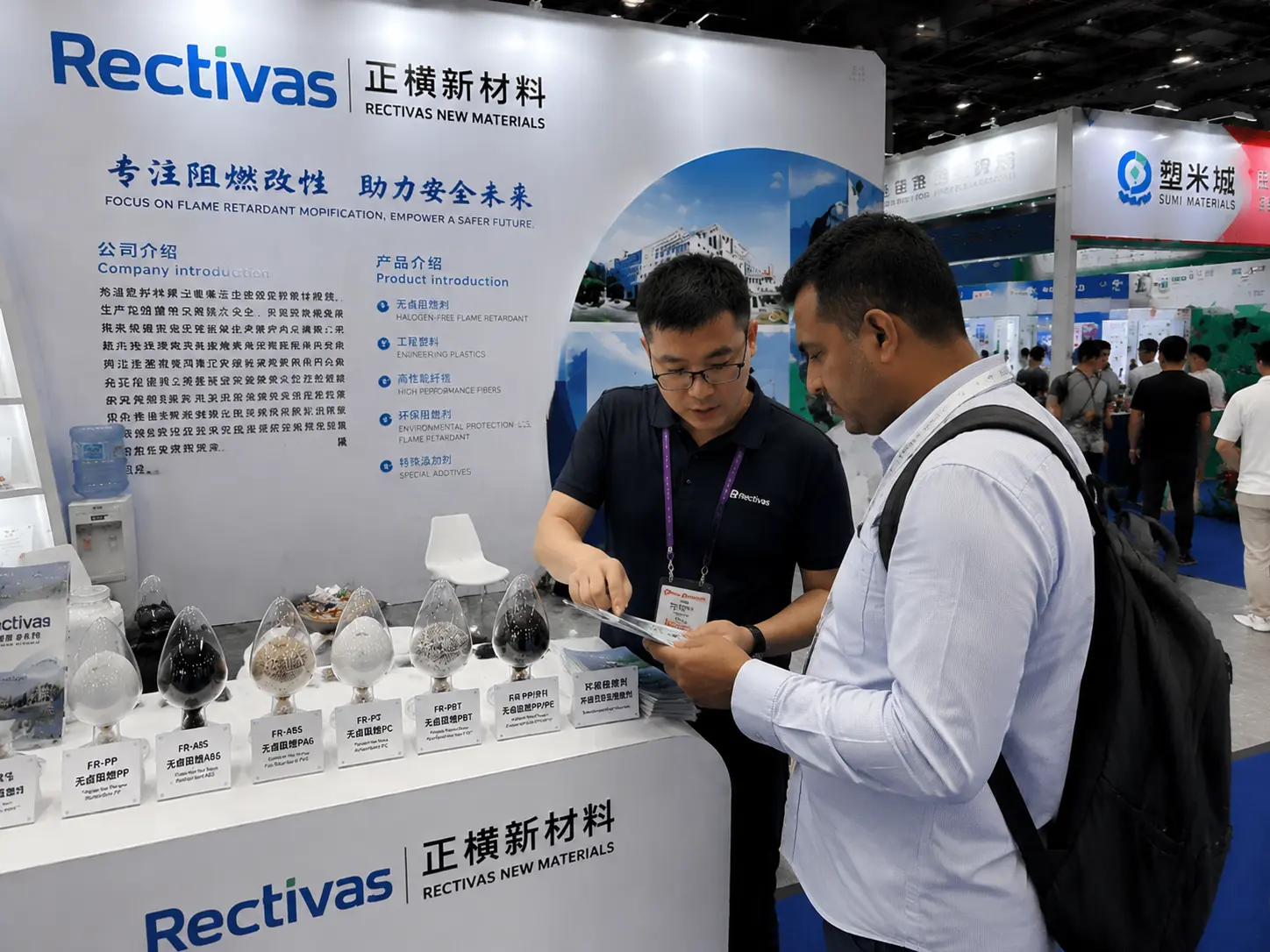
Rectivas staff talking with a visiting buyer at a trade show boothTrade showsMeeting buyers face-to-face at industry exhibitions.
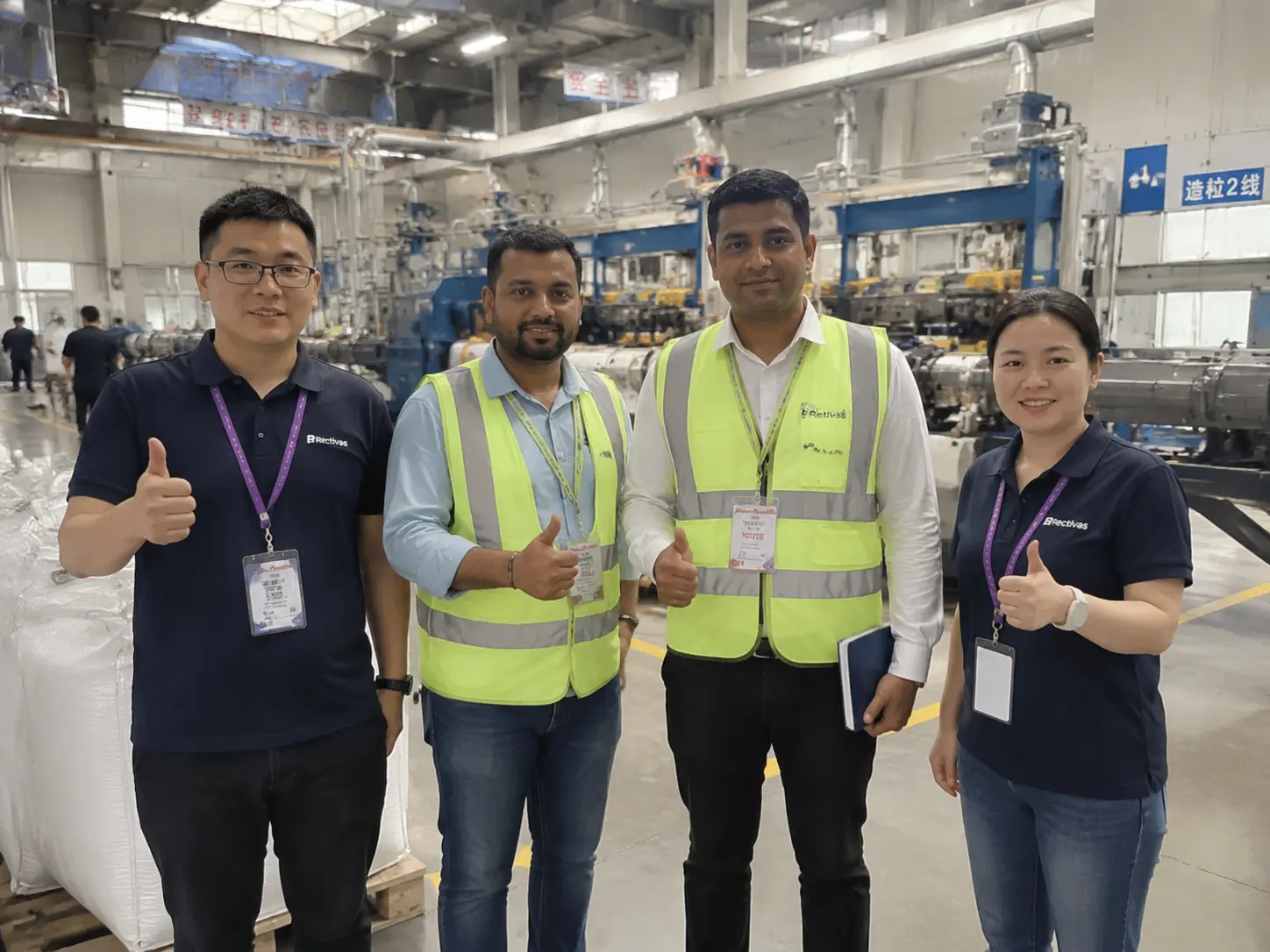
Client visiting the Rectivas factory, group photo on the production floorClient visitsBuyers are welcome to visit and audit the production floor.
08 / 09Resources

Technical Resources for Flame Retardant Selection

These guide topics answer the comparison questions that engineers and procurement teams commonly ask before an RFQ, and they can become dedicated technical article pages later.

Learning path: comparisons, standards and selection guides Internal links: future article cluster entry points Trust value: answer technical questions before contact

These resources answer real buyer questions about flame retardant additives, masterbatch, polymer applications, compliance and RFQ requirements.

09 / 09Buyer Questions

Buyer Questions About Flame Retardant Additives and Masterbatch

Short answers for engineers and procurement teams comparing additives, masterbatch, halogen-free systems, halogenated systems and polymer-specific flame retardant requirements.

Question fit: additives, masterbatch, systems and RFQ Answer value: direct language for engineers and buyers Conversion value: removes basic uncertainty before inquiry

What is the difference between flame retardant additives and flame retardant masterbatch?

Flame retardant additives are powder, liquid or compounded ingredients added during formulation. Flame retardant masterbatch is a pre-dispersed pellet concentrate in a carrier resin, designed for easier dosing, cleaner handling and more consistent processing on extrusion or injection molding lines.

When should a buyer choose additives instead of masterbatch?

Additives are usually better when a compounder wants maximum formulation control, direct adjustment of active ingredients or integration with an existing compounding process. Masterbatch is usually better for direct let-down, cleaner feeding, smaller trials and converters without dedicated powder handling systems.

Do you support halogen-free and halogenated flame retardant systems?

Yes. Selection can include halogen-free flame retardants, halogenated flame retardants, brominated systems and low-smoke options. The right direction depends on base polymer, target flame rating, smoke requirements, cost target and compliance needs such as RoHS or REACH.

Which polymers and applications can be supported?

Typical applications include PP, PE, PVC, PC, PC/ABS, PA/Nylon, ABS, PU and LSZH cable compounds. Each polymer has different processing temperature, dispersion, smoke, mechanical and color requirements, so the recommended additive or masterbatch should be selected by application.

What information is needed before recommending a grade?

Useful RFQ details include base resin, processing method, target flame rating such as UL94 V-0 or LOI, halogen-free or halogenated requirement, color, transparency, mechanical performance, certification needs and expected trial or annual volume.

Selection note: the questions above connect product form, chemistry, polymer application, compliance and RFQ requirements so buyers can prepare a more useful first inquiry.
Request for Quotation

Need a Flame Retardant Solution for Your Polymer?

Send your resin type, target flame rating, processing method and compliance requirements. We will recommend a suitable additive or masterbatch option for sample testing.

Get a Custom Quote

Reply within 1 business day